How to Choose Pneumatic Fittings for Your Line
How to Choose Pneumatic Fittings That Actually Work for Your Setup
By RUICHEN PNEUMATIC | July 22, 2026
You’d think a fitting is a fitting. Screw it in, push the tube in, air flows. But anyone who’s built a pneumatic system knows: pick the wrong fitting and you’ll be chasing air leaks all week.
Here are the three things that actually matter.
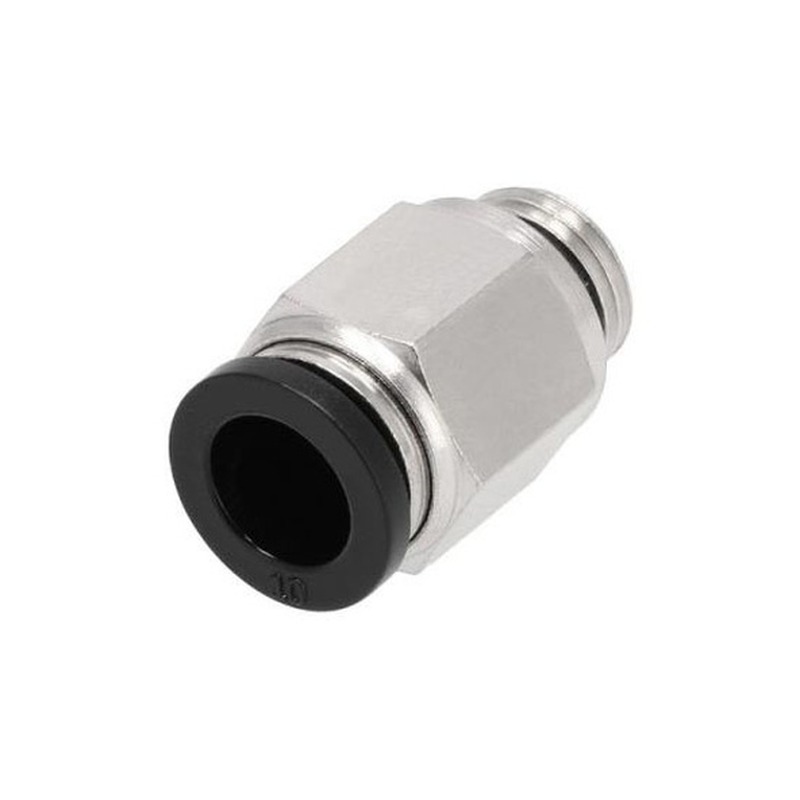
Standard push-in fitting — the most common type in modern pneumatic systems.
1. Tube Size Matters More Than You Think
Every fitting is designed for a specific tube outer diameter. 4mm, 6mm, 8mm, 10mm, 12mm, 16mm — these are the common sizes. Use the wrong one and the tube slips out, or worse, blows off under pressure.
Rule of thumb: the bigger the tube, the more airflow you get. A 4mm tube is fine for a small cylinder. An 8mm or 10mm tube is better for main supply lines.
2. Thread Type (This One Gets People)
Fittings come with different threads to connect to valves, cylinders, and other components.
- BSPP (G thread) — Parallel thread. Seals with an O-ring or washer. Common in Europe and Asia.
- BSPT (R thread) — Tapered thread. Seals by metal-to-metal contact. Uses PTFE tape. Also common in Asia.
- NPT — Tapered thread, 60 degree angle. US standard. Not interchangeable with BSP.
- Metric (M5, M6, etc.) — Found on some solenoid valves and small components.
Mixing BSP and NPT is the most common mistake we see. They look similar but won’t seal. If your valve came from Europe, use BSP fittings.
Left: brass fitting for high-temp or high-pressure. Right: plastic push-in for standard use.
3. Material Selection
Plastic (PBT / PA / PP). Lightweight, cheap, corrosion-proof. Good for standard compressed air at room temperature. Most common choice.
Brass. Stronger. Handles higher temps and pressures. Good for valves and manifolds. Resists corrosion better than steel.
Stainless steel (304/316). For food, pharma, chemical, and marine. Expensive but lasts forever.
Nickel-plated brass. Best of both worlds — brass strength with corrosion resistance. Popular in industrial settings.
Quick Checklist Before You Buy
- ✅ Tube OD (outer diameter) matches the fitting
- ✅ Thread type and size match your component (BSPP? BSPT? NPT?)
- ✅ Working pressure rating covers your system (most are 10-15 bar)
- ✅ Temperature range fits your environment (standard seals: 0-60°C)
- ✅ Material is suitable for your media (air, water, vacuum, chemicals)
Need help picking the right fitting? We’ve got plastic, brass, and stainless in stock. Browse at cnruichen.com/pneumatic-fitting/ or drop us an email at info@cnruichen.com.