Which Push-In Fitting Do You Need? PC, PL, PE, Decoded
By RUICHEN PNEUMATIC | September 1, 2026
Your machine runs on fittings. Most people never think about them until one leaks.
Push-in fittings do one job. They hold your air line in place and let you pull it out later. No tools, no sealant. Push the tube in until it clicks and you’re done. That’s why they’re everywhere in factory automation.
The confusing part is the model codes. PC, PL, PE, PU, PV, PW. They all look the same until you know what the letters mean. Pick the wrong shape and you fight the tube all day.
What the letters mean
PC is your straight connector. Tube on one end, male thread on the other. It screws into valve ports, cylinder ports, and manifolds. This is the one you buy by the box. If in doubt, start here.
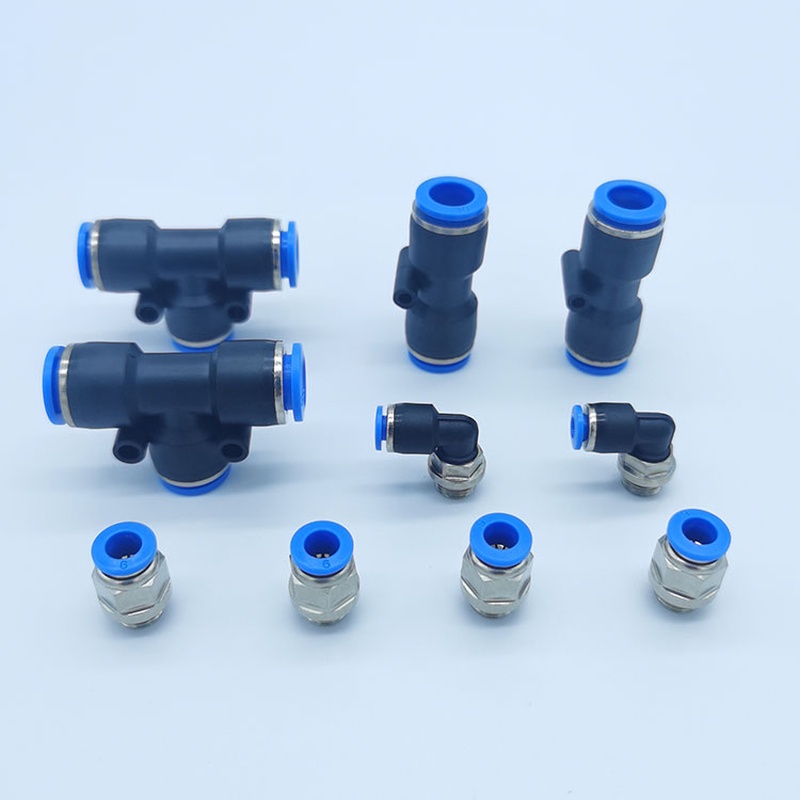
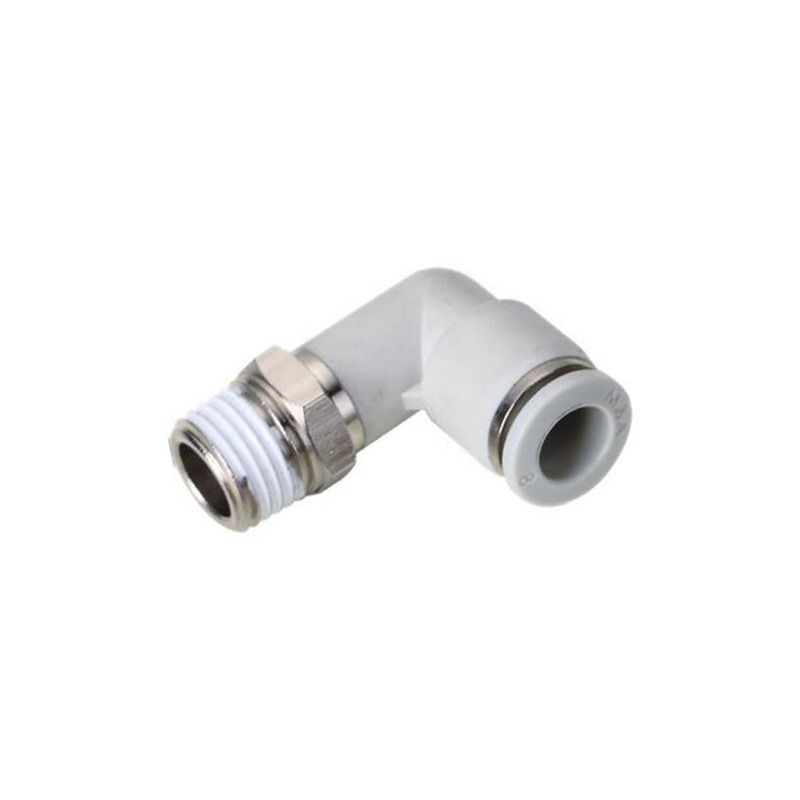
PL is the 90-degree elbow. The tube exits sideways instead of straight. Use it when the port faces a wall or the line has to turn a corner. It saves space and stops the tube from bending too sharply.
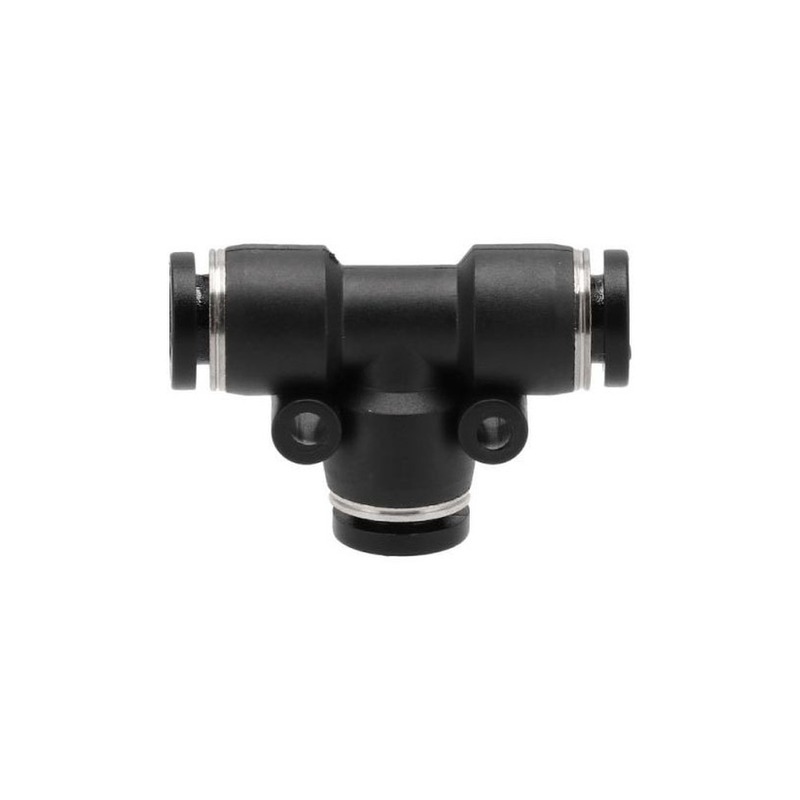
PE is the tee. One air in, two out. It splits a single line to feed two cylinders, two sensors, two anything. Building a small manifold out of fittings? PE is how.
The rest of the alphabet follows the same logic. PU is a straight union, tube to tube. PV is an elbow union. PG is a reducer, stepping down from 10 mm to 8 mm. PJ is a blanking plug for a port you might use later. PW and PY are Y-branches. You don’t need to memorize them. Just know they exist and ask when you need one.
Three numbers matter more than the letters
Tube OD comes first. 4, 6, 8, 10, 12, 16 mm. Match it exactly. A loose tube leaks. An oversized tube cracks the body. Both are annoying.
Thread second. Metric, BSPP, BSPT, NPT. Get this wrong and nothing fits. European and Chinese machines usually run metric or BSP. American machines run NPT. Say the thread out loud twice when you order. It’s the most expensive mistake you can make.
Pressure third. Our fittings are rated to 1.0 MPa working, which covers almost every shop compressor. Running higher pressure or vacuum below -100 kPa? Tell us. You need a different seal.
Material is a one-line decision
PBT plastic for normal dry air. Nickel-plated brass when the line vibrates or gets knocked around. 316 stainless for food lines, washdown areas, and anything corrosive. That’s the whole rule.
The leak you’re probably chasing
Most leaks aren’t the fitting’s fault. They’re the tube’s.
Cut the tube square. A diagonal cut leaves a gap and the collet grabs unevenly. Push the tube all the way in until it bottoms out. You should hear a soft click. Then pull once to confirm it’s locked. That single test catches most installation failures.
Fittings are cheap. Downtime isn’t. Ten minutes of reading now saves you an afternoon later.
Need a specific size or thread? Send us the tube OD and the thread type. We’ll sort the rest.
Browse push-in fittings at cnruichen.com/plastic-push-in/ or email [email protected].