Irrigation Solenoid Valves, Explained: How to Pick One That Won’t Die in Your Valve Box
By RUICHEN PNEUMATIC | August 5, 2026
A dead sprinkler zone in July is a special kind of pain. The grass goes brown, the water bill stays high, and somewhere in a valve box a $15 solenoid coil quietly gave up.
Most irrigation valve failures aren’t bad luck. They’re bad selection. Wrong voltage, wrong size, or a valve that was never meant to sit outside with water flowing through it. Here’s what actually matters when you buy one.
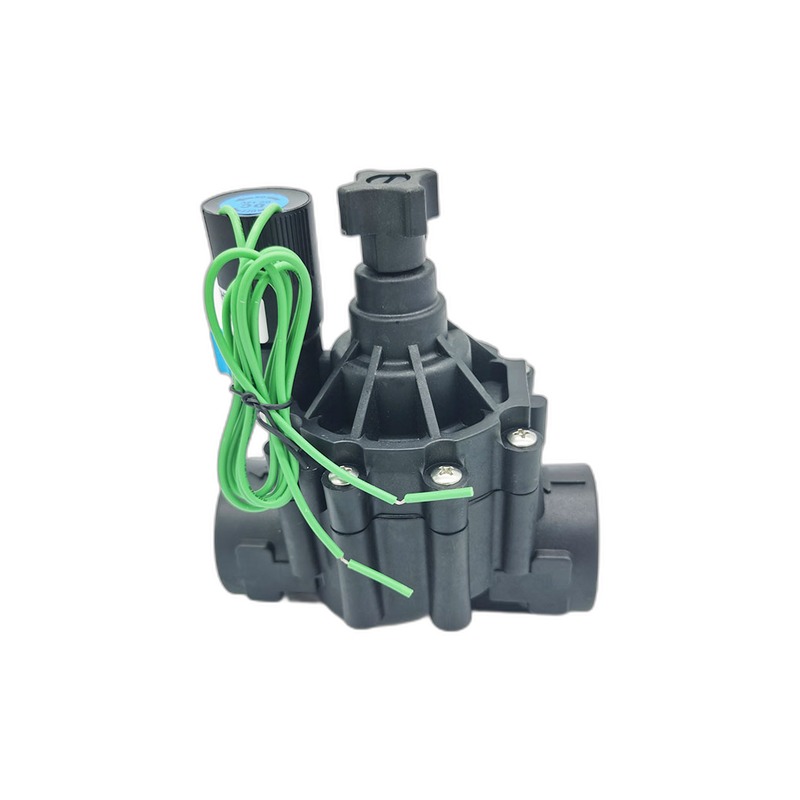
What an Irrigation Solenoid Valve Does
It’s an electric on/off tap for water. Your controller sends a signal, the solenoid coil pulls open a small pilot port, and water pressure lifts the diaphragm to let the zone flow. Signal off, spring closes it, diaphragm reseats, done.
One phrase matters here: water pressure lifts the diaphragm. These are pilot-operated valves, and they need minimum inlet pressure (usually 0.7–1.0 bar / 10–15 psi) to open fully. If your drip system runs off a gravity tank below that, you need a direct-acting valve instead. Different animal entirely.
Where You’ll Find Them
- Residential lawns. Pop-up sprinklers in 3/4" or 1" zones, typically 24VAC.
- Drip irrigation. Orchards, vineyards, nurseries and greenhouses, where low-flow emitters need steady low-volume delivery.
- Commercial turf. Sports fields, golf courses, parks, roadside landscaping.
- Agriculture. Field-scale mainline control and zone valves, often 1.5"–2".
- Dust control. Construction and mining sites running timed water curtains.
How to Pick the Right One
1. Match the voltage to your controller
This is the #1 cause of fried coils. 24VAC is what nearly every standard sprinkler controller outputs. DC pulse (latching) coils only draw power for a few milliseconds when switching, which makes them the obvious choice for battery or solar systems, and for valve boxes that sit a long wire run away from the controller. Mix 24VAC valves with a DC controller and your coils die in week one.
| Controller / power source | Valve voltage |
|---|---|
| Standard sprinkler timer | 24 VAC |
| Battery / solar system | DC pulse (latching) |
| Off-grid greenhouse | 12 or 24 VDC |
2. Size the valve to the zone’s flow
Add up every emitter in the zone (number of heads × GPM per head), then add a 10–15% safety margin. A valve that’s too small drops pressure. One that’s too big wastes money and can slam shut with water hammer.
| Valve size | Typical flow | Best for |
|---|---|---|
| 1/2" | 20–80 L/min | Drip zones, small gardens |
| 3/4" | 40–160 L/min | Residential lawns |
| 1" | 80–300 L/min | Commercial landscape, sports fields |
| 1 1/2"–2" | 400–1,500 L/min | Agriculture, mainline |
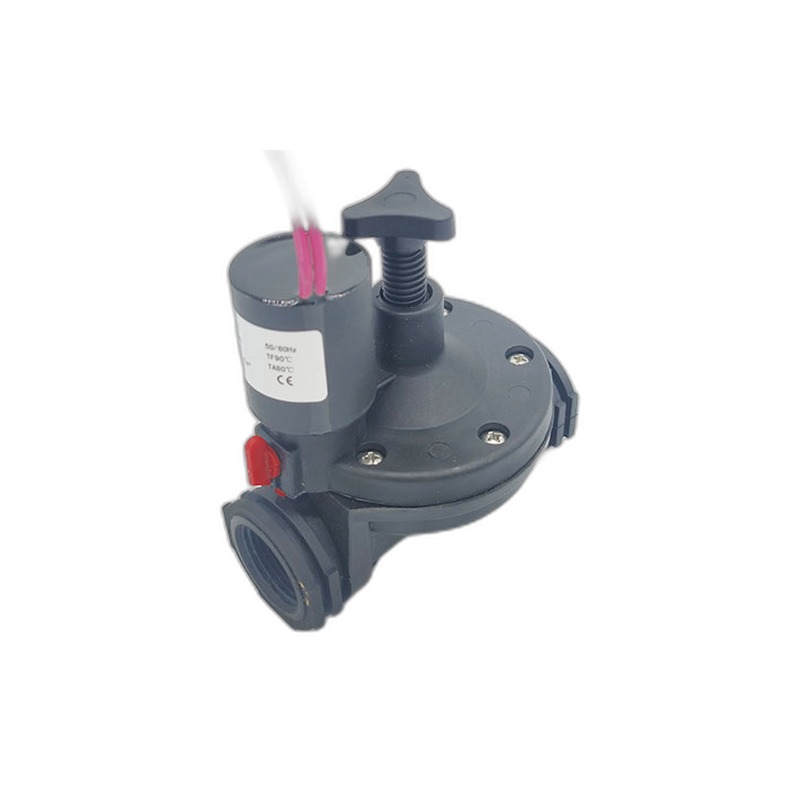
SPV-20, the 3/4" G-thread valve with weather-resistant coil and manual flow override.
3. Check the pressure rating
Residential valves are usually rated to about 10 bar. Ag and commercial ones go higher. Buy a valve whose rating clears your system’s maximum pressure with room to spare. More installations fail from pressure mismatch than from electrical faults.
4. Think about the environment
Plastic bodies win for underground valve boxes. Corrosion-proof, cheap, tough enough for the job. EPDM/Viton diaphragms and seals take the temperature swings. If your site gets hard frost, fit a winterization drain and choose valves you can blow down before the freeze.
5. Filter the water
Small debris is what jams pilot ports and scores seats. A 100–150 mesh filter upstream of the manifold is the cheapest insurance you can buy. Especially if you’re on well water or surface water.
The 3 Ways People Kill These Valves
- Wrong voltage. 24VAC controller wired to a DC coil. Dead coil, usually within minutes.
- No filter. Sand and pipe shavings clog the pilot port; the valve buzzes or refuses to open.
- Ignoring minimum pressure. Pilot-operated valves below about 10 psi only crack open, which causes flutter, noise, and premature diaphragm wear.
What Ruichen Has
We make plastic-body irrigation valves for landscape, agriculture and greenhouse work:
- SPV series — 1/2" to 2" (G/NPT), DC24V or 24VAC, with manual flow override and weather-resistant coils. Angle-connector versions for tight valve boxes.
- SNV-15 — 3/4" compact valve with Viton seal and DC latching option.
- Toro-style & Rain Bird-style — 24VAC latching pulse valves plus replacement solenoid kits (RB1.1) that drop straight into existing valves. Common service-part order.
- 2WP-50 / SPV-50P / SPV-50PF — large-port 2" and DN50 flanged valves for agricultural mainline, IP68 rated, manual override.
- SPV-BV — flanged valve with a battery-operated water-timer controller for 1–8 zone scheduled irrigation, no wiring needed.
- NZ drippers — pressure-compensating nozzles, 4–8 L/h, for drip lines.
All of it rated for water with outdoor coils, CE & RoHS certified. We ship to distributors and irrigation contractors across Europe, the Americas, the Middle East and Southeast Asia, factory-direct.
Need irrigation valves for a project? Browse the range at cnruichen.com/irrigation-solenoid-valve/ or email [email protected].