Nobody orders a pneumatic cylinder that’s too small on purpose. It just happens. You look at the machine, pick a bore that “looks right,” and it works for a while. Then one day the cylinder stalls halfway through a stroke and the line stops. That afternoon costs more than the cylinder did.
The good news: sizing a cylinder is simple math. Force equals pressure times piston area. Do it once on paper and you stop guessing forever.
Do the force math first
Work out how much push you need. Load, friction, gravity if it’s a vertical move. Then add 20 to 30 percent on top. Seals and pressure drop eat some of that, so the number on paper is always better than reality.
Size at your lowest working pressure, not what the compressor reads when nothing is running. A shop running 6 bar that drops to 5 bar under load has about 17 percent less force available.
Numbers people remember: a 32 mm bore gives roughly 480 N at 6 bar. A 50 mm, about 1,180 N. An 80 mm, about 3,000 N. Need 2,000 N? Take the 80. Round up to the next standard bore, never down.
Match the stroke to the job
Stroke is the distance the rod travels. Measure the actual movement, add a little for cushioning and brackets, then order that. Long strokes on small bores risk the rod buckling. Keep the stroke honest and the rod will thank you.
Retract force runs 5 to 15 percent weaker than extend, because the rod takes up piston area. If the pull direction is the hard part of the job, factor that in.
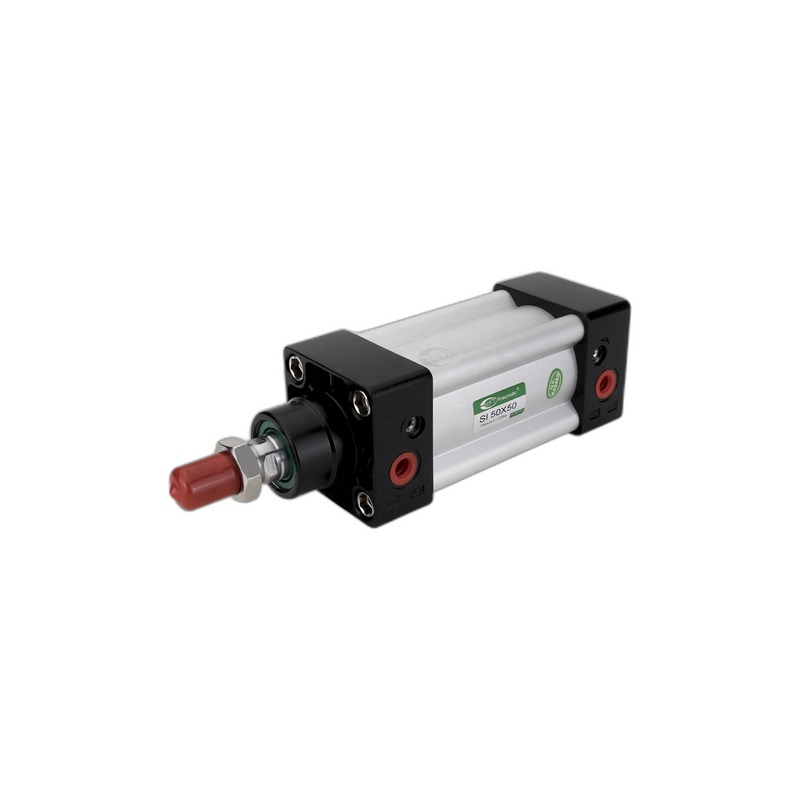
The three ISO numbers that matter
ISO 15552 covers standard cylinders, 32 to 320 mm bores. Tie-rod or profile bodies, adjustable cushioning, mounting dimensions that swap between brands. Running Festo or SMC gear? An ISO 15552 cylinder replaces it without re-drilling anything.
ISO 6432 is the mini round-body standard, 8 to 25 mm bores. Small, light, often stainless steel. Use these in grippers and tooling stations where space is tight and loads are light.
ISO 21287 is the compact standard. Same force as a standard cylinder of the same bore, but 40 to 50 percent shorter. That’s the one for crowded panels and short travel.
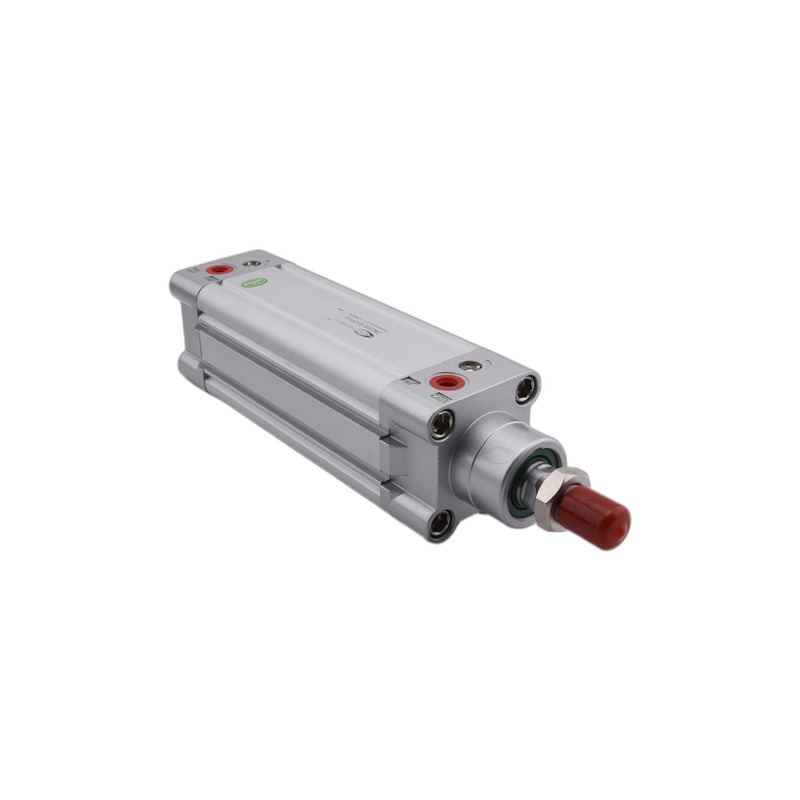
Mounting and material are half the decision
Mounting style changes how the load hits the cylinder. Foot and flange mounts work when the force runs inline with the travel. Clevis and trunnion mounts allow pivoting and take bending loads off the rod. Side loading is what kills seals early.
Material matters too. Aluminum bodies are light and cheap, fine for dry shop air. Stainless steel costs more but survives food washdowns, salt air and chemical spray. In a wet plant, an aluminum cylinder is a consumable. Stainless is a machine part.
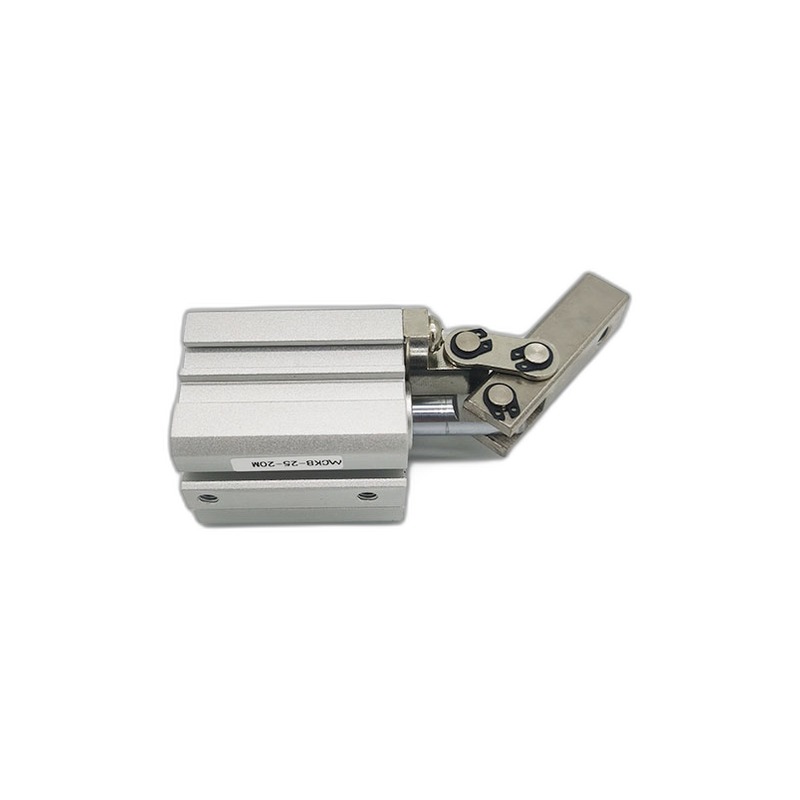
What Ruichen has
We stock standard ISO 15552 tie-rod cylinders (SI series), ISO 6432 round-body cylinders in aluminum and stainless (SU-1, DNC, MA), and compact types (MCKB, SDA). Double-acting, single rod, custom strokes on request. Send us the force you need and the space you have, and we’ll tell you the bore and stroke to order.
Ten minutes of math beats a week of guessing. Size it right once and it runs for years.
Need a cylinder for your machine? Browse the range at cnruichen.com/air-cylinder/ or email [email protected].