Compressed Air Isn’t Clean. That’s Why Your Tools Keep Dying.
By RUICHEN PNEUMATIC | August 18, 2026
Open the drain valve on your compressor tank. Watch what comes out. Rust, water, oil film, grit. That’s what your tools have been breathing.
Every compressor pulls in room air and squeezes it. The water vapor and dirt don’t disappear. They condense in the tank and ride the line. By the time air reaches your valves, it’s carrying moisture, rust and oil mist. That mix gums up seals and kills solenoids. It fails slowly, then all at once, on a deadline.
An FRL unit sits between the compressor and your equipment. Filter, regulator, lubricator. Three jobs, one block.
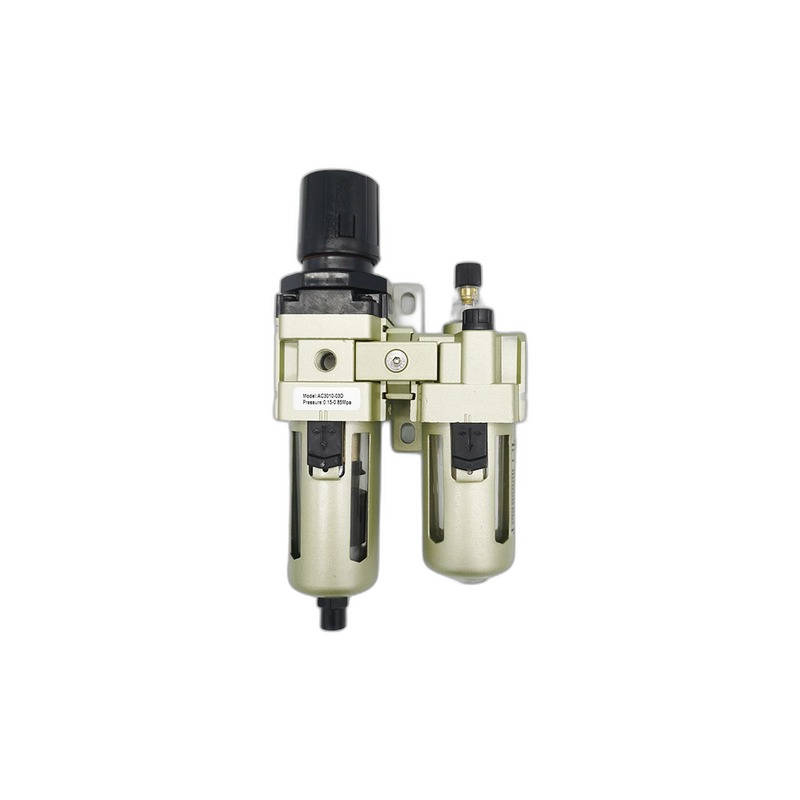
The filter stops the junk
The filter catches water, rust and dirt before they reach anything expensive. Elements are rated in microns. 40 micron is the standard for general pneumatic control. Drop to 5 micron for precision valves or instruments. Finer elements clog faster, so most shops only need 40.
Check the bowl now and then. Half full of water means the filter is earning its keep. Drain it.
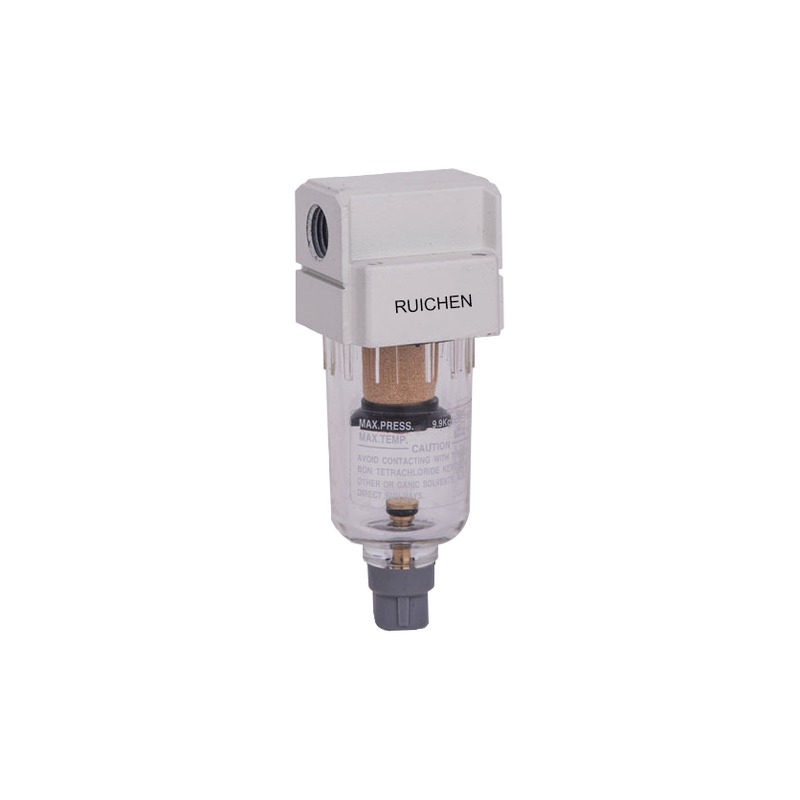
The regulator holds pressure
Compressor output swings as demand comes and goes. A regulator sets a fixed downstream pressure and holds it. Without one, cylinder speed changes, torque tools read wrong, and seals blow from spikes.
A regulator is the cheapest insurance in the whole system.
The lubricator: only where you need it
Here’s the part people get wrong. Not every system needs oil. Many modern valves and cylinders run dry by design. Pump oil into one of those and you collect dust, foul solenoids and make a mess.
You want a lubricator for air tools, or for cylinders with metal-on-metal wear running high cycles. Continuous use, heavy loads, fast cycling: that’s where oil pays. Painting? Keep oil out of that line.
FR or FRL: which one
Self-lubricating or oil-free gear? Skip the lubricator and run a filter + regulator combo. Simpler, cleaner, one less thing to maintain.
Running drills, grinders, impact wrenches, or high-cycle cylinders? Take the full FRL.
How to size one
- Match the flow. An undersized FRL chokes your tools and pressure drops under load. Rule of thumb: rated flow at least 1.5x your maximum air consumption.
- Match the ports. Small tools and compact cylinders: 1/4″ or 3/8″. Medium automation lines: 1/2″ or 3/4″. High-flow stations: 1″ and up.
- Pick the bowl material. Polycarbonate shows oil and water at a glance. Go metal for heat, UV, salt air or rough environments.
- Pick the drain. Manual drain is fine for attended stations. Auto drain when the unit runs unattended or the climate is humid.
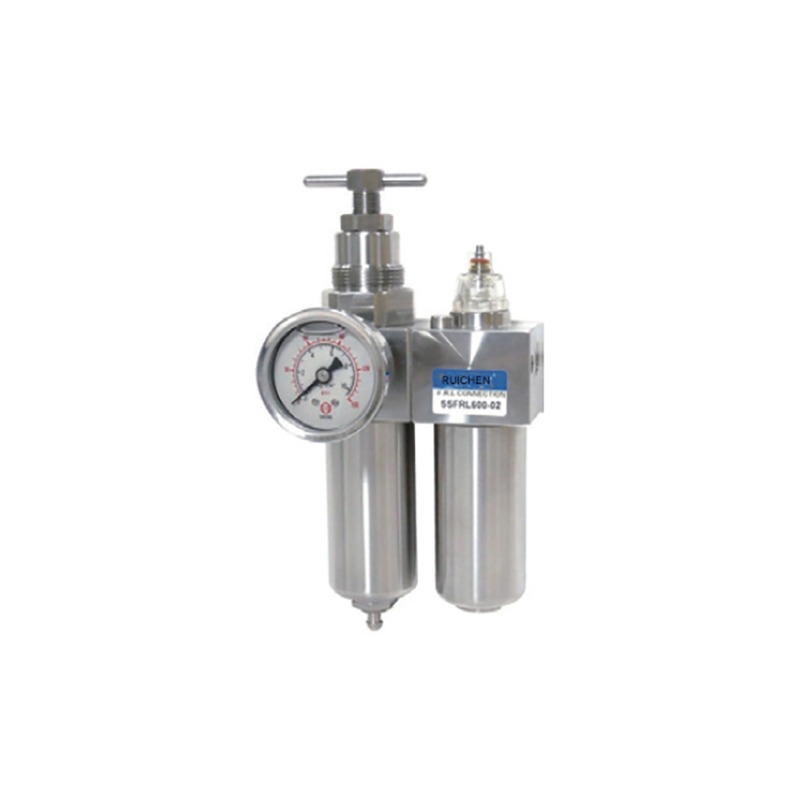
What Ruichen has
We stock modular plastic FRLs (AC series) for everyday shop use, and 316 stainless steel units (SS series) for food, marine and chemical environments. We also sell the pieces separately: filters, regulators, lubricators, pressure gauges, and high-pressure FRLs rated to 17 bar. Mix and match to fit your line.
Compressed air is one of the most expensive utilities in a shop, and the most ignored. A decent FRL costs less than one failed valve. Put one on the line and your tools stop dying on the deadline.
Need an FRL for your line? Browse the range at cnruichen.com/frl-units/ or email [email protected].